2011年1月21日星期五

How to Manage iPhone File

For example: management between two different iPhone

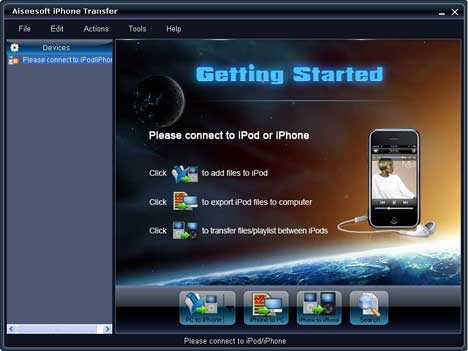
1 Run the software, and connect two iPhone to your computer via USB cable.

Manage iPhone File

2 Open the library that you want to export files and pick ones that you need to manage.

3 Click Manage iPhone Video File it will show you the folder of another iPhone that you want to transfer to. Click OK. The management can be finished automatically.

As you can see, it is extremely easy to use for not only master-hands but also beginners. Find more information of iPhone to computer management, computer to iPhone management or more at: Manage iPhone Video File/Music File

Aiseesoft DVD to iPad Converter and Aiseesoft iPad Video Converter.

There is another piece of software named iPad Converter Suite.

2011年1月16日星期日

How to Convert FLV to 3GP

How to convert FLV to 3GP at fast speed?

How to convert FLV to 3GP

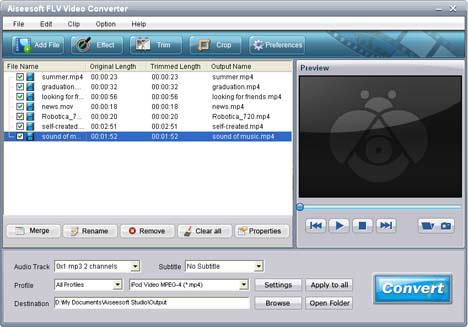
Step 1: Add FLV file(s) you want to convert

Input FLV video file to be converted to 3GP (feel free to add more than one file as you need).

Step 2: Set 3GP as output formats

Select the 3GP video file from the profile list, the preview video screen may play the selected file. You are allowed to catch your favorite picture during previewing. Find 3GP video in the default folder.

Step 3: Convert

Click Start to convert FLV to 3GP. After converting, you can play the converted 3GP files anytime anywhere.

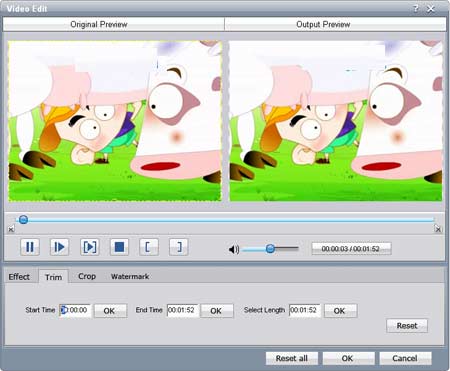
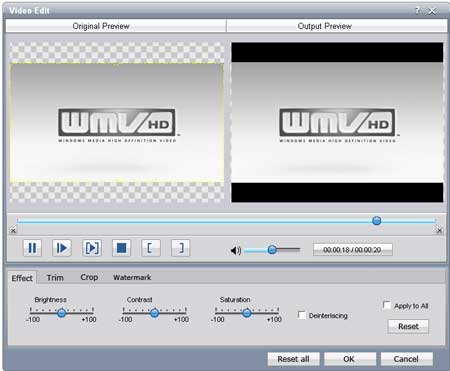
Tip: If needed, customize your output files with additional editing features such as Trim, Crop, Effect, Merge from the main user-friendly interface.

For example, click trim to open the edit window to trim any video clips.

FLV to 3GP

Need more help, explore FLV to 3GP.


2011年1月10日星期一

With 500-Shareholder Concerns Gone, Will Facebook Make Big Acquisitions?

At the stroke of midnight this New Year’s Eve, Facebook’s financial gurus must have breathed a sigh of relief. It was a new fiscal year, 2011, which meant an end to the days of stressing about having 500 shareholders.

Staying at 499 shareholders or fewer is something Facebook has worried about since at least 2007, and sidestepped by creating a special kind of restricted stock unit for new employees and making small talent acquisitions that avoided, when possible, awarding start-ups and their investors with Facebook stock.

Now that that’s over, Facebook’s acquisitions team may get the go-ahead this year to pursue larger and more complicated deals.

As is now widely known, SEC rules mandate that a company with more than 500 shareholders at the end of a fiscal year must report financial information, something Facebook didn’t want to do as a private company. But if you read the fine print, as BoomTown’s Kara Swisher first reported, Facebook has 120 days to disclose from the end of the fiscal year in which it crosses 500 shareholders.

That means the end of April of 2012, by which point Facebook has said in paperwork for its Goldman Sachs funding deal it expects to file to go public.

Basically, Facebook has exorcised a curse hanging over its head by outlasting it. Like a nightclub bouncer, the company had been letting one shareholder out of the room before allowing another in. And now that’s over, as long as Facebook goes public next year.

(Though at this point, many of the company’s financial details are already leaking out as part of the troubling Goldman Sachs deal.)

For now, Facebook is still being cautious about adding shareholders; the Goldman deal (which we’ve heard still hasn’t closed) was structured to combine Goldman’s wealthy clients into a single entity to avoid adding too many shareholders.

Facebook’s corporate development team has said publicly that part of why it likes doing “acqhire” deals of small, early-stage start-ups is because they are relatively uncomplicated, financially speaking. Wherever it can, Facebook tries to cash out an acquired start-up’s shareholders instead of giving them stock. In the past, if a start-up had too many shareholders, it might not have been an attractive acquisition candidate.

Facebook doesn’t always get its way on that preference; sometimes it pays in stock. For instance, Facebook bought two start-ups that had taken investments from RRE Ventures: Hot Potato (in August 2010) and Drop.io (in October). In the first case, Facebook paid RRE in cash, but the second time around, RRE was able to negotiate for stock.

But now that Facebook seems to basically be giving itself the go-ahead to surge past 500, who gets to be shareholder number 501 or even number 1,001? It’s possible they could be the employees and investors in larger, more complicated M&A deals. Facebook’s name has come up in acquisition discussions for companies like Twitter and Foursquare, but now it may actually start closing more of those deals.

To date, Facebook’s largest acquisition has been FriendFeed for $50 million in cash and stock in 2009. The first time many tech watchers heard of the 10 tiny start-ups Facebook acquired in 2010 was when the deals closed.

But now that big deals are on the table, the question is, who’s next?

Twitter CEO Dick Costolo on Platforms, Reliability and Independence at D@CES

Twitter has crossed the threshold from Web novelty into something substantial. Now Dick Costolo’s job is to turn it into a business–one big enough to justify the sky-high valuation investors have given the messaging company.

He’ll talk to Kara Swisher about the company’s efforts to sell advertising on the service, and if we’re lucky, he’ll give us a glimpse of his improv comedy roots, too. Don’t be shy, Dick!

Dick starts off by insulting Kara’s vest. “Matador casual,” he calls it. Good one! Kara responds by asking him why he’s hanging out at CES.

The same reason everyone else is, Dick says: To talk to industry people. For example, he’d like to get device makers to preload some features like “Fast Follow.”

Kara wants to know if Dick would like a “Twitter button” installed on phones. No, says Dick. But he’d like Twitter to work the same way on different platforms.

So how do you make that happen?

Dick: We’re assigning a product team to make sure that this happens.

Kara: And you’re talking to TV people, too? What’s that about?

Dick: Yep. Because mainstream TV viewing, more and more, they have a device in their hand when they’re watching TV. Like on “Glee.” The characters tweet while the show is on. [This baffles Kara.] When “Glee” starts, tweets per second for “Glee” shoot up, and stay up 100 times that level until the show ends, and then they drop.

That has interesting implications. Like, it takes the DVR out of the mix, because you have to watch in real time to make it worthwhile.

But we don’t know if all of this means Twitter while you watch TV, or Twitter actually on your TV screen.

Kara: Is it important for you to be on the screen?

Dick: We’re already on the screen. But we don’t know if that will be the mainstream experience.

Kara: We had Steve Levitan from “Modern Family” talking about how the Web doesn’t help him, but that he and his team like Twitter.

Dick: Sure! “I was having a conversation with Conan O’Brien, as one does” and he was talking about the importance of Twitter to him, and how the 140 character limit is the right length for a joke. It’s definitely the case that network TV people like Twitter, because it gives them feedback, like they’re in the theater, watching how the shows play out.

Kara: Keep talking about celebrities! I love celebrities.

Dick: Sure! The folks that we’ve hired to work with talent and agencies, etc., we think of those people has high-value publishers. They have a huge following. A lot of people are on Twitter just to hear what those folks have to say.

The interesting thing about the top 200 to 300 tweeters–a lot of them are musicians, actors, etc. LeBron James, etc. I think Lady Gaga is number one. But! They’re not all celebrities. There’s CNN Breaking News. And the New York Times. And other brands like Gary Vaynerchuk, who aren’t really that known outside that world.

And Twitter is disaggregating some of those businesses. Like a third of all the players in the NFL playoffs are using Twitter actively. And many players have more followers than their teams. [Here Dick explains football to Kara.] That’s fascinating.

Kara: Let’s go back to phones. Whats the most important device? Tablet? PC? Phone?

Dick: Mobile is a more and more and more common use of Twitter–40 percent of all tweets created on mobile devices. That might seem low, but it was 25 percent a year ago. 50 percent of active users are also active on mobile.

But Twitter ought to work platform to platform. We want to be agnostic.

Kara: What about what’s coming out from Palm? Working with them?

Dick: Not yet.

Kara: What about games? Talking to those guys?

Dick: Yep. Like with Microsoft on their Xbox, you can see integrating tweets into people who have discussions on Xbox.

Dick: You lost interest in the answer to your question. [True!]

Kara: You’re so annoying.

[Some laughter. Not a lot, though!]

Dick: Anyway, the important thing for us is consistency across device to device to device.

Kara: Speaking of working consistently, how’s that going for Twitter?

Dick: Right. So, we raised a bunch of money. We’re hiring “tons of engineers and operations engineers” in the last year. We hired 100 people in Q4, out of about 350 total. And we’re working very hard on erasing our “technical debt.”

Kara: “That’s a great word for fuck-ups”

Dick: Anyway, we’ve got a guy assigned to this pretty much exclusively. And there used to be a tolerance for this, and now there isn’t. If someone fires a pistol next to your ear every hour, after a while you stop flinching when you hear it. It’s crucial that we do this, both for our users and our engineers, who shouldn’t have to get up at 3 am all the time.

Kara: Time for a vision question, which stumps Yahoo. What is Twitter? What is your vision?

Dick: “We want to instantly connect people everywhere to what’s most important to them.”

See, that’s a good statement. We’re not just a social network that’s connecting people. It’s connecting for a purpose.

So some people meet girlfriends on Twitter. And other people get tickets to shows they like on Twitter. Etc.

And you don’t have to tweet to get a lot of value out of it.

Kara: What’s the percentage of people who just read Twitter, and don’t tweet themselves?

Dick: Rising. And we have to make that easier to do. “We’re going to spend a lot of time making that consumption experience much better.”

Kara: What’s your business plan?

Dick: To continue to raise money!

[hohoho]

Dick: I’m going to steal Jeff Weiner’s line. We’re a technology company that’s in the media business. Our business model is an advertising model [cough, cough, that's familiar! You're welcome!] So we’re selling ads, and we’re letting people promote their accounts, etc. And we really don’t have to do anything else. Our engagement rates on these ads are ridiculously high. When we saw our stats this last spring when we launched, the numbers were so big we thought we were measuring it incorrectly.

Kara: Is that a big enough business to be a standalone company and/or IPO?

Dick: It’s enough to be a standalone company.

Kara: Sell or IPO?

Dick: We want to be a standalone company. It’s my sincere hope. We’ve accomplished 1 percent of what we want to do.

Dick Costolo of Twitter

Kara: You like to sell companies, though.

Dick. Yes, I had two companies that I sold. But that doesn’t mean we’ll sell this one. I’ve had two kids too. But I shouldn’t get a reputation for having kids.

Kara: What’s up with people buying and selling secondary shares of Twitter. It’s an issue for Facebook. What about you?

Dick: We keep an eye on it, and talk to employees about it. But I just think that there are other people that are focusing on it and paying attention, and I’ll let them talk about it. But I just don’t think about that stuff on a day-to-day basis.

Questions and Answers

Q: [sorry missed it].

But answer seems to be about whether Twitter is a platform company or not. Dick quotes Ev Williams by saying they’re not a platform company–they’ve had an API. They want people to be able build off Twitter and build into Twitter. Which requires a more robust API.

Kara has more questions. How do you look at yourself as a leader?

Dick: As a very bald leader.

Kara: But you’re very different than Evan.

Dick: Right. Two components. Three founders at company: Ev, Jack, Biz. They all come at it from a different angle. Jack thinks about simplicity and elegance and the mobile experience. Ev thinks about the user. Biz is “the protector of the brand and the guardian of the culture.”

Kara: He’e the guy who goes on Colbert.

Dick: And he’s great at it. Anyway, those guys are great. My focus is on operational greatness. I try to emulate operators like Ben Horowitz (Opsware) and Susan Wojcicki (Google).

Q: What’s up with that internal page rank for each user? asks Ben Parr from Mashable.

Dick: Your’re not exactly right. We play around with stuff like that. But there’s nothing robust that we would think of productizing anytime soon, and we don’t use it for things like resonance, which we use in ads.

Q: [Sorry, couldnt quite understand.]

Dick is talking about WikiLeaks in general, says there was something specific about WikiLeaks today that he can’t talk about. In general, he hates government mandates to keep things quiet. And he hates that a woman in China was punished for retweeting something. He reiterates Twitter’s desire to connect people with useful information. “We’re going to lash out at things that prevent us from doing that, as aggressively as we can.” The proof is that we’re banned in China. “We’re not going to sacrifice what we’re trying to do to, you know, get into this country over here.”

Q: How will you work with brands in the future, vs. advertising?

Dick: Our promoted suite of stuff doesn’t simply let advertisers use a giant bullhorn. This stuff has to be organic. “It almost is like a quality-assurance program.”

[Some context for what Dick wouldn't talk about: Feds Subpoena Twitter Seeking Information on Ex-WikiLeaks Volunteer].

Dick is now talking about Twitter and international growth and language. Twitter is growing fast in the U.K. but not in Germany. Why is that? Because German has really, really long words. “There’s a bunch of stuff we want to do, and have to do” just to make things usable in those languages.

Last question, from Kara: What’s the most interesting thing you’ve seen at CES?

Dick won’t give a one-word answer. CES is a “quantum conference.” Some years are transformational, some are incremental. “This seems like it was an incremental year.”

And we’re done! Thanks all for your patience. We’ll have video up over the next few days, which should help fill in the gaps left by my lousy note-taking.
2011年1月7日星期五

Verizon CEO Talks Up Faster Networks at CES

Verizon CEO Ivan Seidenberg is taking his turn on the Consumer Electronics Show stage on Thursday morning. His speech will follow an electronics-industry state of the union speech from trade organization head Gary Shapiro.

Mobilized will have live coverage starting in a few minutes at 8:30 am PT. Verizon Wireless will have a separate press conference later on Thursday, and I’ll trek over from the Hilton to the Venetian for that as well.

8:29 am: FYI, Consumer Electronics Show Association head Gary Shapiro is up first, so he may talk for a bit. Verizon CEO may not start until 9:00.

8:32 am: They are still letting folks in. Mobilized suspects she could have gotten an extra 10 minutes sleep and is moderately bitter.

8:32 am: With no appreciation for irony whatsoever, they have just asked their “friends in the press” to cease using wireless in 10 minutes.

8:40 am: The giant video screens just changed to a big Verizon logo. “Our program will begin shortly,” comes the voice from above, asking participants to silence their mobile devices and us press to kindly refrain from doing the job we are expected to do–I mean turn off our wireless cards.

8:43 am: I think it’s okay for me though, because I am on 4G and I keep hearing how robust and capable it is.

8:46 am: Lights dim. Music peppier. Still no Gary Shapiro, but I think we’re moments away from the man before the man we’ve all been waiting for.

8:47 am: Shapiro delivering the expected announcements on how the world is full of innovation and possibility.

“Each year I await the CES like a kid awaiting Santa Claus,” Shapiro says.

8:48 am: Interesting pitch on how the CEA is trying to keep the show affordable for attendees and exhibitors.

Economy slowly improving after years of trouble, Shapiro says.

8:51 am: Innovation is our secret sauce. It’s on our jeans. Oh, wait. No. It’s in our genes.

8:54 am: Faint applause as Shapiro makes a pitch for freeing up more of the wireless spectrum for broadband and other uses.

He notes that only 10 percent of TV is now consumed over the public airwaves, as opposed to 100 percent some years ago.

“They are squatting now on our broadband future,” Shapiro says of the TV industry.

8:56 am: Now showing a propoganda video on how some in Washington are threatening innovation.

Images of burning money and cute little kids as the announcer offers up more scary talk.

8:59 am: It’s a pitch for the CEA’s Innovation Movement.

Shapiro now back and pitching his new book: “The Comeback.” He’ll be signing books after the keynote. Um, Mobilized would, but we have to do our hair.

9:01 am: Interesting stat: By 2014, CEA says 70 percent of consumer electronics will connect to the Internet.

9:04 am: CEA is planning some sort of tech week event next summer in New York.

9:04 am: Las Vegas Convention Center will now also be known as the Las Vegas World Trade Center. (I guess that sounds better than the O.J. Simpson Coliseum.)

9:07 am: Shapiro finally introducing Verizon’s Seidenberg.

Seidenberg began his career as cable splitter’s assistant at New York Telephone.

9:08 am: Another video, this one with stars, and voiceovers of people talking about technology.

9:10 am: Seidenberg takes the stage.

9:11 am: Seidenberg begins by telling crowd to ignore ban on wireless.

“When Verizon’s on, turn ‘em on,” he says. “Ping all you want.” Loud applause

9:13 am: Ten years ago only one in three Americans had a cellphone. Now it is 90 percent, Seidenberg says.

Ten years ago, few people had broadband–now 85 million American households have broadband.

Ten years ago, video accounted for less than 10 percent of Internet traffic. Now it’s more than half and could go to 90 percent, Seidenberg says.

Now it’s time to turn the wheel again, he says. “What will consumers want in 10 years?”

9:15 am: Seidenberg is joined on the stage by president and COO Lowell McAdam.

9:16 am: Talk shifts to Verizon’s new LTE (Long Term Evolution) higher-speed 4G network. Verizon announced its commitment to LTE in 2007. Network launched last month.

“As people are discovering, not all 4G is created equally,” McAdam says, touting the advantages of Verizon’s network, such as the fact it operates on a contiguous area of spectrum.

McAdam talks about how Verizon is expanding its LTE lineup beyond laptop cards. He mentions the Motorola Droid Bionic smartphone and Xoom tablet that were announced on Wednesday. But, he says, people will have to go to Verizon Wireless’s press conference to see the other devices coming this year,

Now McAdam is talking about FiOS, which covers 15.4 million homes and will cover 18 million when finished over the next year.

“We didn’t do all this for bragging rights,” McAdam says. “We did it to transform the (broadband) experience.”

9:25 am: Oooh, Time for special guests.

Jeff Bewkes, Time Warner CEO is the first guest.

9:26 am: Bewkes says this is the second golden era of television. “Everything is up,” he says, pointing to ratings, advertising and more.

All of the great TV content, he says, is going on demand, on every device. Quality is going up from HD to 3-D.

9:31 am: Getting ready for the product announcement.

Starts with a video of Conan and other Time Warner stars watching clips of themselves and others on various devices. Charles Barkley is looking at hoops video on an iPad.

Ellen DeGeneres is watching clips of herself on a cellphone while ignoring a guest.

9:34 am: Bewkes talking about TV Everywhere.

Idea, introduced about 18 months ago, is that once you pay for a piece of content, you should have it anywhere, on any device.

“You shouldn’t have to have a PhD as a consumer to figure out how to get all this,” Bewkes says.

9:38 am: Bewkes says that to replicate TV everywhere without that approach you would have to cobble together dozens of services. He shows a chart with logos including Netflix, iTunes, ESPN 3 and a whole bunch more.

9:40 am: Exit Bewkes. Welcome Motorola Mobility CEO Sanjay Jha. (So I guess we’re not getting anything new really on TV everywhere–Support for Live TV is a key missing component.)

9:42 am: Jha is talking about the origins of the original Droid and its successors, and the growth of Android.

Jha holds up the just-introduced Droid Bionic phone, which supports Verizon.

I call this device the end of waiting,” Jha says, noting it can offer video conferencing without jitters, and fast sound downloads.

9:44 am: Next Jha holds up the Motorola Xoom, the tablet that Motorola showed off yesterday. They are playing the same Android 3.0 video shown at Motorola’s press conference yesterday.

9:47 am: Jha says that Xoom will ship as a 3G device in February and will be upgradeable to 4G in the second quarter.

Now Google is onstage giving an overview of Honeycomb. Google executive (whose name I didn’t catch) says that the company spent a year trying to adapt Android for tablets.

“We wanted our tablet experience to be better and not just bigger,” says the Google guy,

All the controls in Honeycomb are virtual buttons on screen–pixels rather than paint, he quips.

The benefit is such buttons can reconfigure themselves and shift depending on how the tablet is being held.

9:51 am: Now Google demos tabbed browsing in Honeycomb. “It’s really like a desktop experience,” he says.

Gmail has been redesigned for tablets, resembling the iOS version of Yahoo mail, with various panes.

Maps turn to 3-D once you zoom in close enough and can be rotated and the perspective changed with the swipe of a finger.

Notifications now include a photo of the person. Demo guy gets a message from Andy Rubin reminding him to show the improved task manager feature.

9:56 am: Honeycomb version of YouTube shows a 3-D wall of different videos to watch.

Books presented in a similar 3-D carousel.

9:57 am: Video chat part of Google Chat. Sometimes you want face-to-face communication, Google guy says. Now Honeycomb supports that.

10:03 am: Things are starting to wrap up, with McAdam giving an overview of what Verizon has at its booth, including a Cisco enterprise tablet, health care monitoring tools, as well as its crop of phones and laptop cards.

2011年1月6日星期四

How to Convert Videos to Xbox

Tips:

1 After importing the files, you can preview the video and capture your favorite picture saving in JPG, GIF or BMP.

2 Open the Effect window to customize the output effect by dragging Brightness, Contrast, Saturation adjustment bars one by one to adjust.

Convert Videos to Xbox

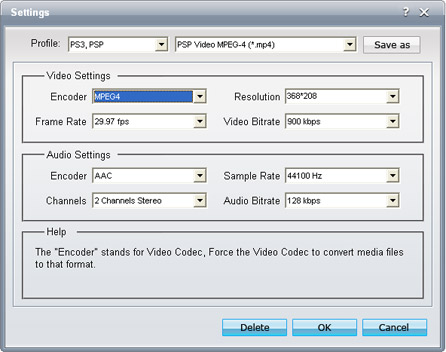
3 The software allows setting different output video/audio parameters.

Convert Videos to Xbox

4 Set snapshot folder, image types, converting done action and CPU usage in the option window.

Explore Videos to Xbox for more detailed info!

2011年1月5日星期三

How to split PDF pages

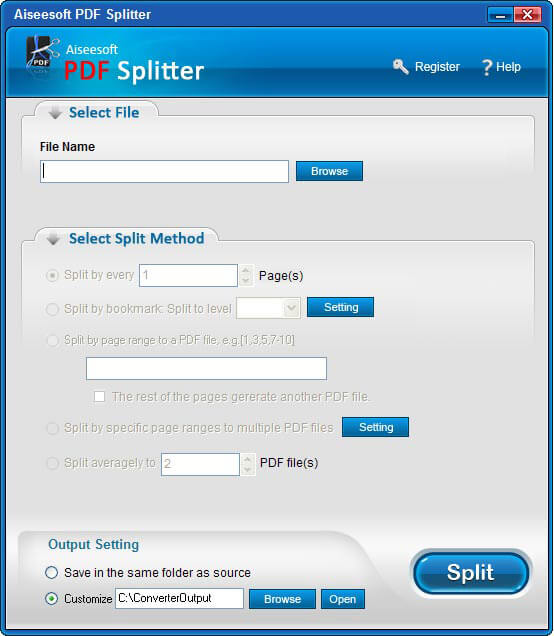
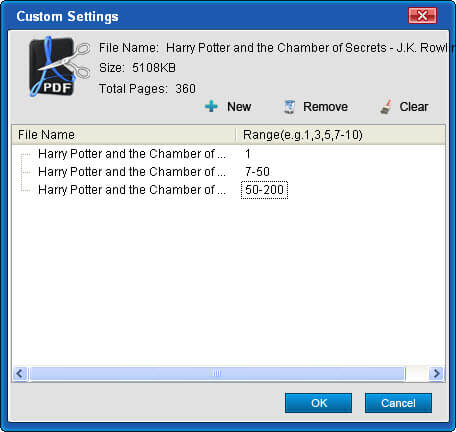
Do you want to pick out some useful contents for you from a large PDF files? Aiseesoft PDF Splitter can help you solve this problem. It enables users to split PDF file with numerous methods. And the quality of output PDF files would be perfect.

Preparatory work: Download and install Aiseesoft PDF Splitter

Step 1: Add PDF file

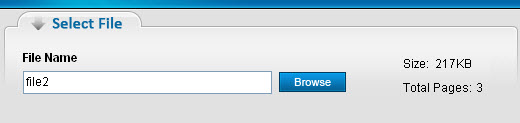
Click the "Browser" button to input the PDF file you want to split.

Step 2: Choose split method

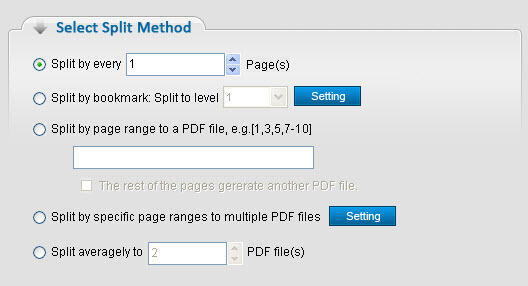
This PDF Cutter provides you with five split methods.

Split PDF by every n page(s)

If you choose this method, you can divide the PDF file into several PDF files with n pages per file.

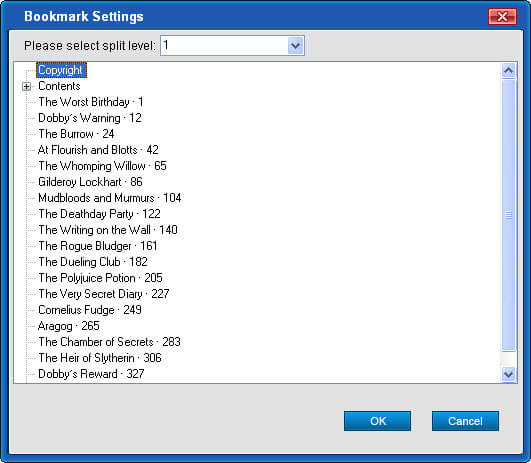
Split by bookmark

Split the PDF file by its bookmark, such as chapters, sections, etc.

Split PDF file as you defined

You could define your own way to split the PDF file, such as by both pages or by page ranges.

Split PDF averagely

This split method enables you to split the PDF file averagely to n PDF files.

Step 3: Start converting PDF

After setting all these above, you can click the "Split" button to start the converting process.

2011年1月2日星期日

How to Convert VOB to MP4 on Mac

Step-by-step guide:

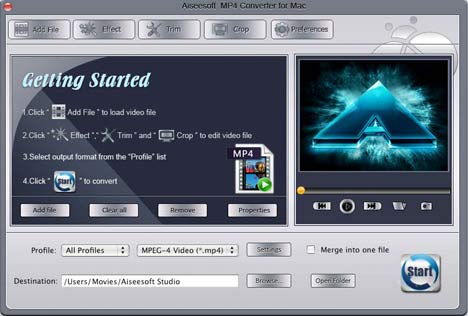
1, Install the program on your Mac computer. Then you will see the screen like this

How to convert VOB to MP4 Mac

2, Click "Add file" button on the main window to select video file(s) – VOB you would like to convert to MP4.

3, In the Profile option, click the down arrow, then choose MP4 format as you want

Under the Destination, click "Browse" button to select the target folder you want your VOB videos to store.

Note: You can rearrange their settings or further edit files at your will any time using such buttons below:

convert 3GP to MP4 Mac

4, Click "Start" button VOB to MP4 software for Mac OS X shall start to work automatically.

If you want to do more, please refer to How to convert VOB to MP4 Mac